Unlocking the chemistry of natural product biosynthesis

Our research spans chemical biology, drug discovery, and renewable materials — connecting molecular mechanisms to real-world applications.

Major research themes

Chemical Biology of Natural Product Biosynthesis

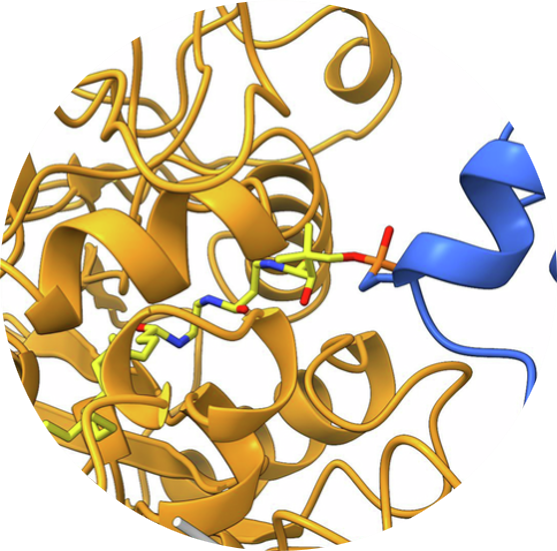
Assembly-line synthases (FASs, PKSs, and NRPSs) build antibiotics, anticancer agents, and essential lipids by passing reactive intermediates between enzymes on a small, mobile carrier protein. Using mechanism-based crosslinkers and structural biology, we trap these fleeting carrier protein interactions to reveal at atomic resolution how substrates are sequestered, delivered, and released. Our goal is to learn the rules these pathways follow and reprogram them toward new therapeutics.

Recent highlights include:

Heberlig et al. Nature 2025, 638, 261.

Jiang et al. Nat. Commun. 2025, 16, 7798.

Re et al. J. Am. Chem. Soc. 2025, 147, 16705.

Suo et al. J. Am. Chem. Soc. 2025, 147, 33248.

Kalaj et al. J. Am. Chem. Soc. 2024, 146, 18650.
Chemical Biology

Drug Discovery

Many cancers, from leukemias to solid tumors, depend on aberrant mRNA splicing, which makes the spliceosome a compelling but underexploited target in oncology. We use total synthesis and biosynthetic engineering to build analogues of natural splicing modulators such as FD-895 and the pladienolides with improved potency, selectivity, and stability, and we use them as probes to expose the vulnerabilities created by splicing rewiring in cancer stem cells. Through collaborations, these compounds have illuminated splice deregulation in adult and pediatric leukemia, and one analogue, Rebecsinib, is now in clinical trials.

Recent highlights include:

Chan et al. J. Med. Chem. 2023, 66, 6577.

Crews et al. Cell Stem Cell 2023, 30, 1.

van der Werf et al. Cell Rep. Med. 2023, 4, 100962.

Smith et al. RSC Chem. Biol. 2025, 6, 1126.

Adaikpoh et al. J. Nat. Prod. 2026, 89, 1081.

Drug Discovery

Algae Biotechnology

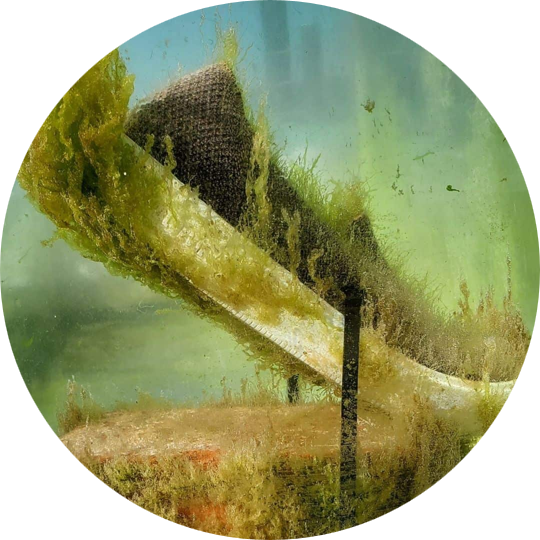
Most plastics are made from petroleum and persist for centuries once discarded, so we are replacing that model with one built on microalgae that turn sunlight and CO2 into biomass. We engineer high-yield algal strains and use continuous-flow chemistry to convert their fatty acids and sugars into monomers for polyurethane foams, thermoplastics, adhesives, and coatings that rival petroleum-derived materials. Because these materials biodegrade in soil and seawater, with their microplastics consumed by marine microbes, they support a circular materials economy that is renewable at the source and safe at end of life.

Recent highlights include:

Halloran et al. Angew. Chem. Int. Ed. 2025, 64, e202421540.

Bruckbauer et al. Chem. Mater. 2025, 37, 1561.

Wnuk-Fink et al. ACS Sustainable Chem. Eng. 2025, 13, 21622.

Gupta et al. ACS ES&T Eng. 2024.

Allemann et al. Sci. Rep. 2024, 14, 6036.

Algae Biotechnology

Why this work matters

Connecting molecular discoveries to real-world impact

From next-generation cancer therapeutics to biodegradable materials derived from algae, our research bridges fundamental biochemistry with solutions to critical global challenges.

Explore our publications
×

Start typing and press Enter to search